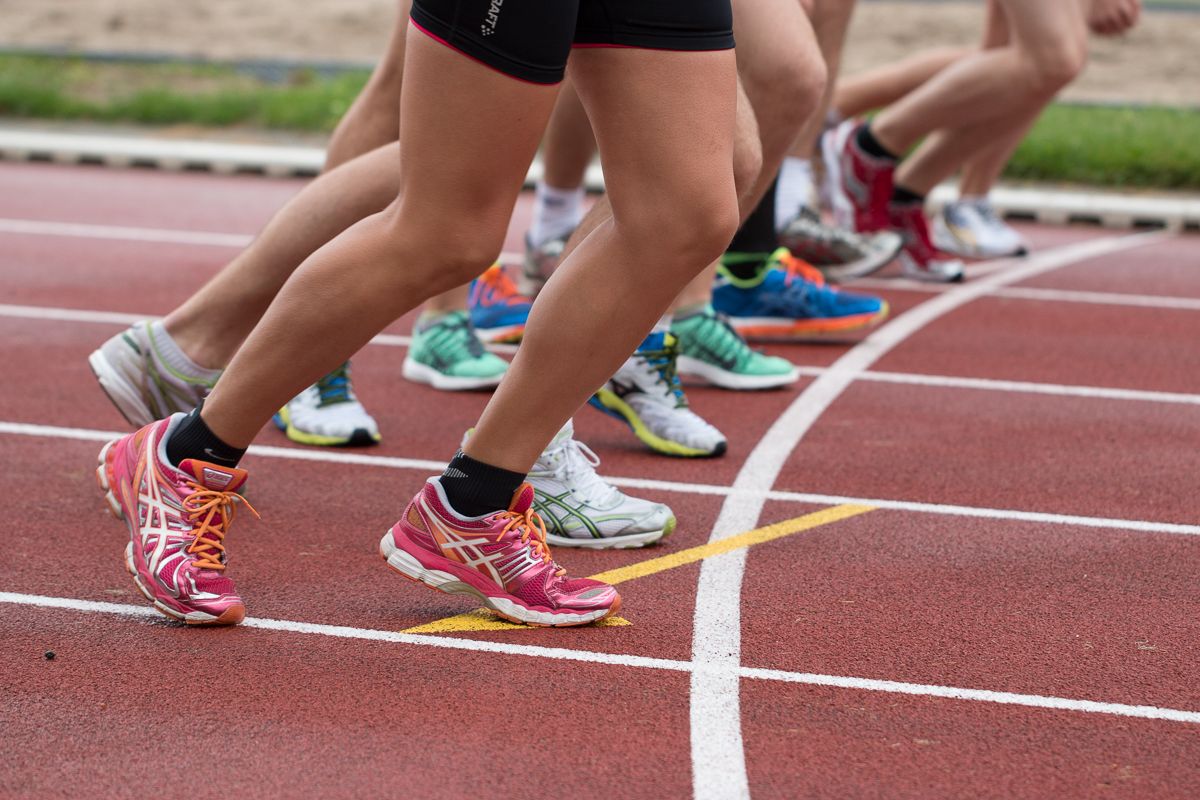
The start line of the 100 metres at a World Athletics Championship is the loneliest and most electric place in sport. Eight athletes, the fastest human beings on Earth, crouch in their blocks and face the simplest, most brutal test that athletics offers: run as fast as you possibly can, in a straight line, for one hundred metres. No tactics, no teammates, no time-outs. Just you, the track, and the air resistance that every tenth of a second spent training has been dedicated to defeating.
The morning of the final had been charged with anticipation in a way that even veteran athletics journalists found unusual. The qualifying rounds had produced times that suggested the world record — one of sport's most storied and psychologically formidable barriers — was genuinely under threat. Weather conditions were close to ideal: warm, with a legal tail wind measured at 1.6 metres per second. Track temperature was optimal for maximum energy return from the surface. And the athlete who would ultimately make history had been in a form that his coach described, with careful understatement, as the best of his life.
The blocks phase of the race, invisible to the naked eye but forensically analysed by biomechanics experts in the seconds after the gun fired, was exceptional. His reaction time — 0.101 seconds — was among the fastest ever recorded in a major championship final. But reaction time alone does not make world records. It is the acceleration phase, from zero to maximum velocity, where champions are separated from the merely extraordinary, and here the eventual record-breaker produced something that will be studied in sports science institutions for years.
His drive phase lasted an unusually long forty-three metres, maintaining acceleration beyond the point where most sprinters begin to transition into maximum velocity running. His stride rate during this phase was measured at 4.6 strides per second — extraordinary for an athlete of his height and leg length. By the sixty-metre mark, when the biomechanical analysis was later published, he was already 0.04 seconds ahead of the previous world record split at that point.
The roar from the stadium began building before the finish line was crossed, as spectators began to sense from the visual cues alone — the gap to the field, the clock visible on the stadium screens — that something historic was happening. When the time flashed on the board, the roar became something physical, a pressure wave that athletes in the warm-up area half a kilometre away later described as audible and distinct.
The post-race scenes unfolded with the particular combination of euphoria and disbelief that accompanies sporting history. The champion ran a victory lap holding his nation's flag, tears streaming freely, occasionally stopping to embrace officials, volunteers, and opponents who had crossed the line behind him. His competitors, themselves among the fastest men in history, formed a guard of honour that spoke to the universal recognition among athletes of what they had witnessed.
The press conference lasted ninety minutes and produced enough material for a season of documentary filmmaking. He spoke about the decade of work that had preceded this moment — the dawn training sessions, the injuries that had required complete rebuilding of his sprinting mechanics, the mental health struggles that he chose to discuss with unusual candour for a high-profile athlete. He thanked his mother, his coach, his physio, and his training group with specificity and warmth. He said that the world record felt, in that moment, less like an achievement and more like a responsibility — a new standard that he was now obliged to defend and extend.
Athletics observers noted that the record, while extraordinary, had been achieved by an athlete who had not yet reached the age typically associated with peak sprinting performance. The conversation about what might still be possible, about how fast a human being can theoretically run one hundred metres, had been reopened with a force that the sport had not felt since the golden age of the late twentieth century.
The track itself has become something of a pilgrimage site in the days since. Spectators have been photographed pointing at the finish line with the particular reverence usually reserved for historical monuments. Which, in a very real sense, it now is.
About David Okafor
David Okafor is a sports journalist covering Athleticsand major international sporting events. Their work focuses on analysis, athlete performance, tournament coverage, and breaking sports news.