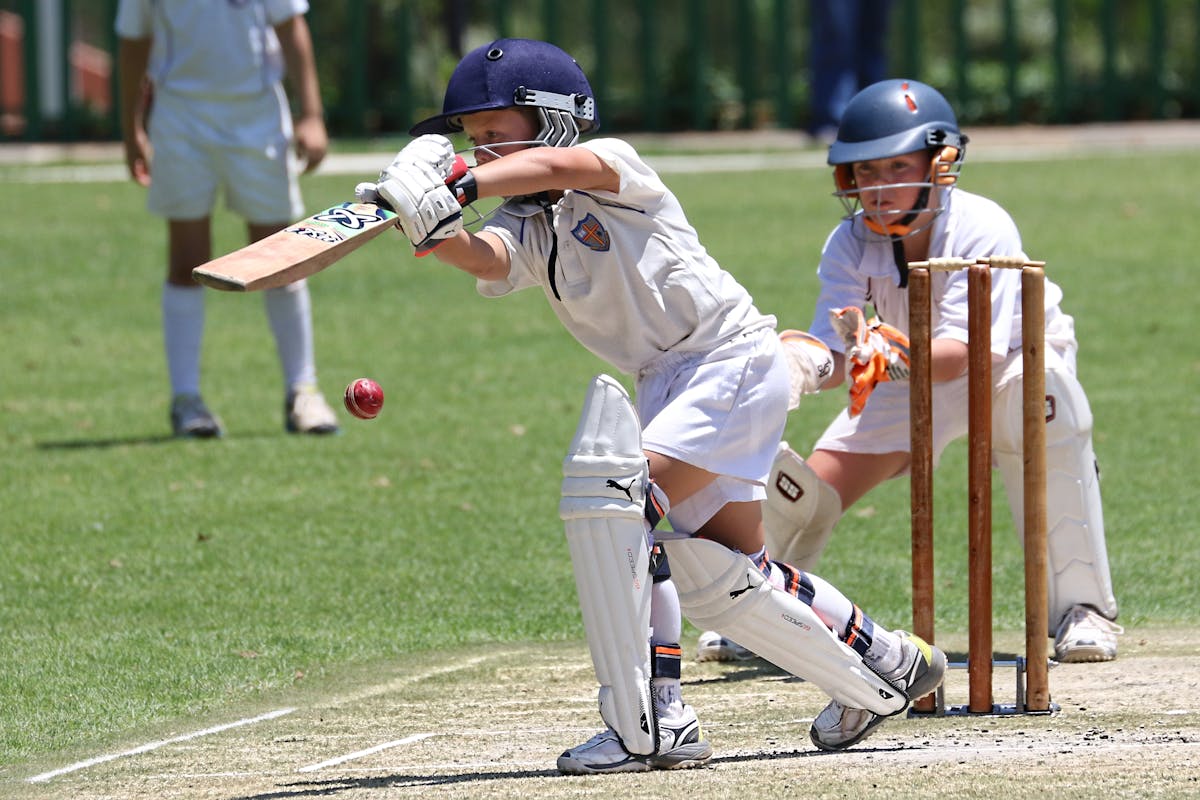
There is a particular kind of time in Test cricket that exists nowhere else in sport. The game unfolds across five days and six hours of scheduled play per day, which means that a Test match can contain literally thousands of deliveries, hundreds of decisions, dozens of mini-dramas, and entire psychological arcs that last longer than some people's working weeks. It is this temporal depth that allows Test cricket to produce the kind of narrative richness that the Ashes series delivered in the most extraordinary Test match played in a generation.
The surface at the ground on the first morning was a greenish-tinged pitch that made both captains thoughtful during the toss. The captain who won it chose to field, a decision that would be second-guessed and then vindicated and then second-guessed again across the five days that followed. The opening bowling spell from the home side was seam bowling at its most potent — the ball swinging late, cutting off the surface, finding edges with a regularity that reduced the tourists to four wickets for twenty-three runs in the first session.
That the touring side recovered to reach 187 all out was a testament to a lower-order partnership that lasted forty-two overs and required the home side to summon reserves of patience and variation that they had not anticipated needing quite so early. The tail-enders batted with an obduracy that gradually shifted the psychological momentum, and when the home side came to bat on the first afternoon, they found themselves navigating conditions that had settled into something much more benign than the morning had suggested.
Day two produced one of the great individual batting performances in Ashes history. The number four batsman for the home side constructed an innings that moved through phases like a symphony — cautious and probing in its opening passages, increasingly assured through the middle movement, and finally dominant and free in its final expression. His century came from 167 balls; his second century came from 88 more. By the time he was dismissed for 211 in the final session of the day, he had placed his team in a position of such commanding authority that the match seemed, to most observers, effectively decided.
It was not decided. Test cricket resists simple conclusions with a stubbornness that borders on the wilful. Day three was interrupted by rain, which meant that the pitch, already showing signs of wear, was exposed to moisture that altered its character completely when play resumed. Overnight, the cracks that had been forming since the first day deepened and widened, and the rough outside the left-hander's off stump became a minefield that the touring spinners would exploit with devastating effect.
The home side's second innings collapse was one of the most extraordinary batting failures in recent memory. From a position of apparent safety, requiring only 187 runs from a minimum of ninety overs to win the match, they lost their first six wickets for thirty-one runs in a period of play so nightmarish that the dressing room television was reportedly switched off by the batting coach who could not bear to watch. The spinning ball defied both reason and physics, turning sharply from the rough and finding edges and pads with a capricious cruelty that seemed to be enjoyed by nobody except the fielding side and approximately half the crowd.
The final session of day five — contested, ultimately, between two genuinely possible outcomes — is already legendary. The last pair batted for eleven overs to save the match for the home side. Both players had career Test averages that made their presence at the crease in this situation somewhere between desperate and absurd. But cricket, more than any other game, rewards courage over calculation when calculation has run out of options, and these two players batted with a fierce, uncomplicated bravery that gradually silenced the partisan crowd and earned the grudging admiration of the fielding side. When stumps were drawn with the match drawn, the standing ovation lasted four minutes.
About Priya Sharma
Priya Sharma is a sports journalist covering Cricketand major international sporting events. Their work focuses on analysis, athlete performance, tournament coverage, and breaking sports news.