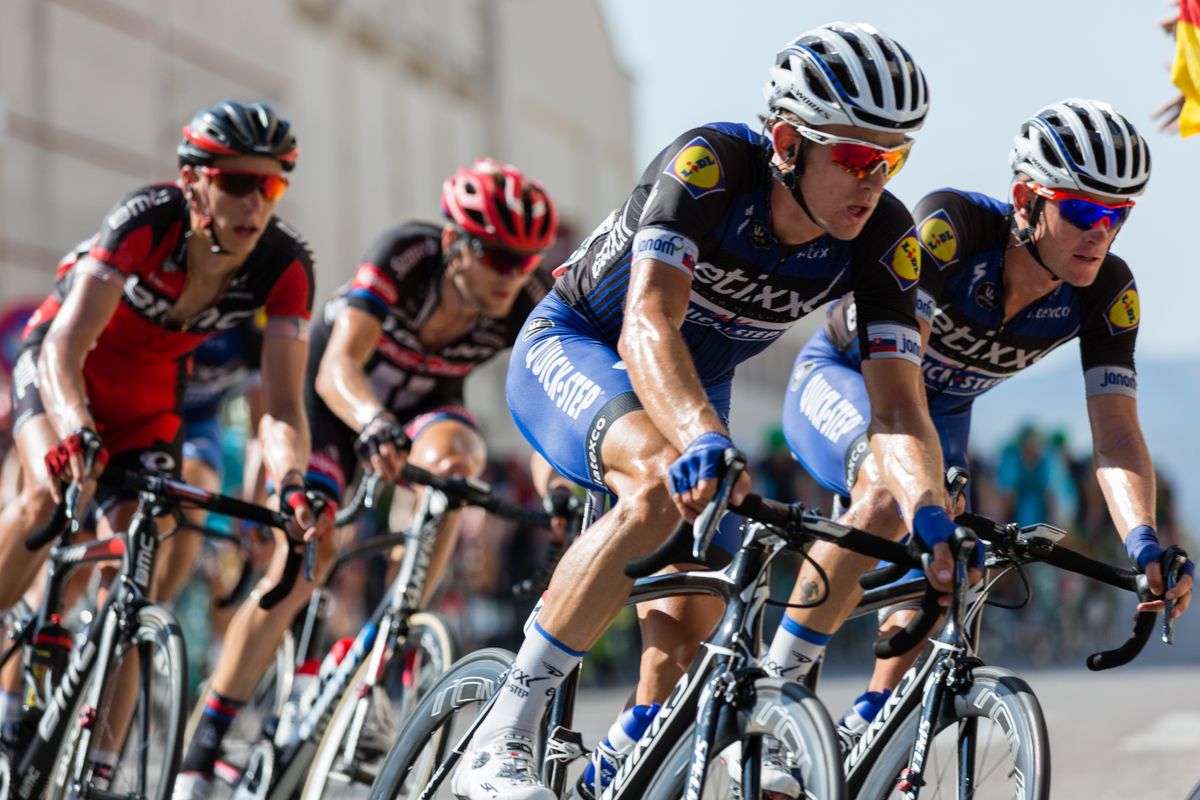
The Tour de France begins, as it always does, with a grand declaration of intent — a prologue time trial in which the world's best cyclists announce themselves, measure their condition against each other, and set the psychological tone for three weeks of racing that will consume them entirely. But the Tour is not won in the prologue. It is won in the mountains, and specifically in a handful of mountain stages that compress the entire race into decisive hours where champions separate themselves from contenders with a finality that no subsequent result can entirely reverse.
This year's route committee has produced a parcours of particular malice. The Alpine stages in week two include three summit finishes in four days — a sequence that will test the recovery capacity of every general classification contender to its absolute limit. The Pyrénean stages in week three offer a mountaintop finale at altitude, on a road so steep and so long that its gradient profile, when plotted on a graph, looks more like a wall than a climb. These are stages designed to make the race dramatic, and they will succeed.
The favourites going into this edition are a familiar cast with unfamiliar dynamics. The reigning champion arrives with the strongest support team in professional cycling, a squad so deep and so experienced that even their domestiques — the riders whose function is to sacrifice their own race for their leader's benefit — have resumes that would make them contenders on many other teams. His climbing is exceptional, his time-trial capacity is underrated, and his tactical intelligence has grown with every grand tour he has completed. The question mark against him is not ability but appetite: there are whispers in the peloton that the mental cost of defending a title through three more weeks of total commitment may be higher than even he can readily bear.
His principal rival is a climber of the pure, rapturous kind that the Tour seems to produce once in a generation — a rider so light and so powerful on steep gradients that the normal rules of competitive cycling seem to bend around him. His recent form in preparation races has been quietly extraordinary: he has been winning not by large margins but with a precision and control that suggests reserves being carefully preserved for the weeks ahead. His weakness, which his rivals' teams have mapped in exhaustive detail, is the time trial. If the race arrives at the final weekend with marginal time differences, the specialists against the clock will have an opportunity.
The undiscovered talent — a rider who turned twenty-three last February and who has not previously featured in the favourites conversation for a three-week race — has produced a build-up to this Tour that has made the peloton's talent scouts revise their projections with unusual speed. His VO2 max, tested in the controlled environment of a sports science laboratory, falls within the range associated historically with grand tour winners. His climbing data from this spring's race programme shows a power-to-weight ratio that is comparable to, and in some individual stage profiles superior to, both of the acknowledged favourites. What is unknown is whether he has the tactical experience to navigate three weeks of racing without making the kind of mistake that inexperience tends to produce under the specific pressures of the Tour.
The sprint stages — the flat days that bookend the mountain blocks and give the peloton's fastest men their opportunities — will provide context and points of interest between the decisive moments. The sprinter's competition this year is as strong as any in recent memory, with four riders capable of winning on any given day and team sprint train formations of increasing sophistication that make the final kilometre of a flat stage a tactical set piece as complex as anything in the mountains.
But it is in the mountains where the Tour finds its soul, and where its history accumulates with each passing July. The great climbs — the names that are as much a part of the sport's mythology as the champions who conquered them — will play their familiar roles in the drama. The crowds that line these roads, sometimes five deep for hours before the race arrives, represent a connection between sport and landscape that is unique to cycling. The Tour de France is not merely a sporting event; it is an annual negotiation between human aspiration and the indifferent grandeur of the Alps and Pyrenees. That negotiation begins again this Sunday.
About Pierre Dubois
Pierre Dubois is a sports journalist covering Cyclingand major international sporting events. Their work focuses on analysis, athlete performance, tournament coverage, and breaking sports news.