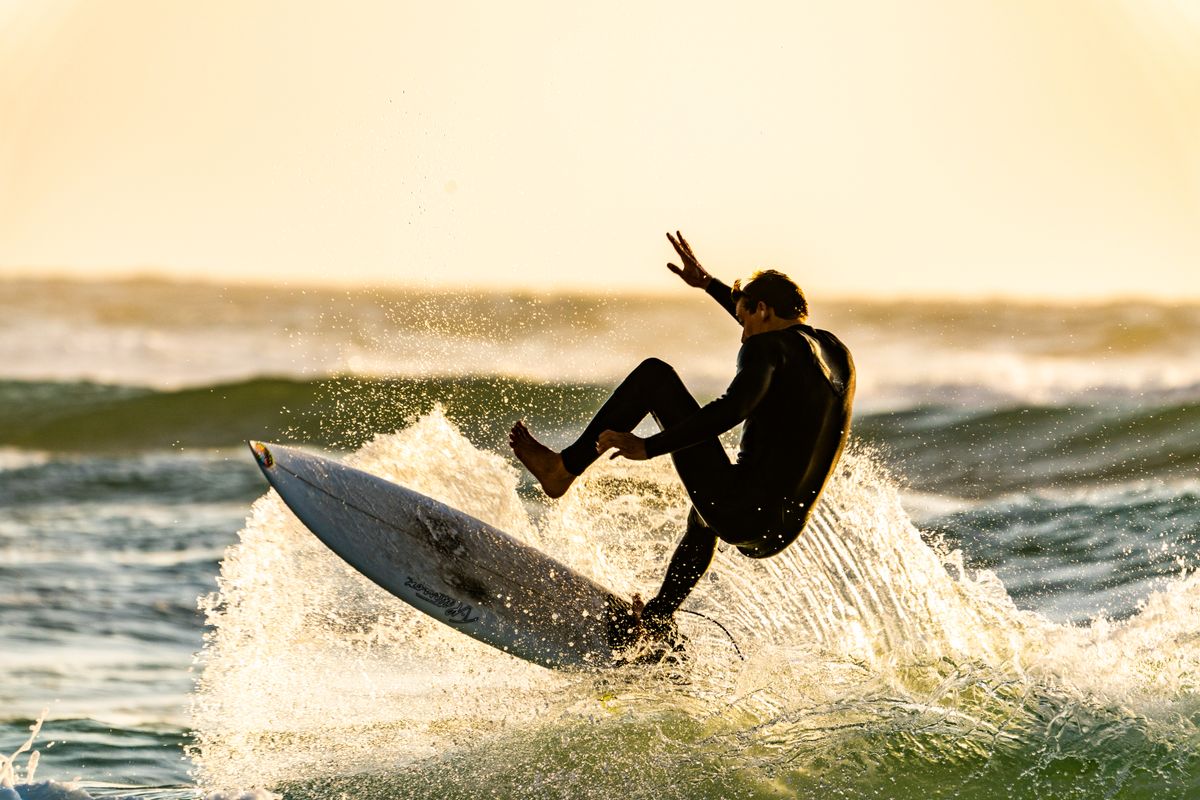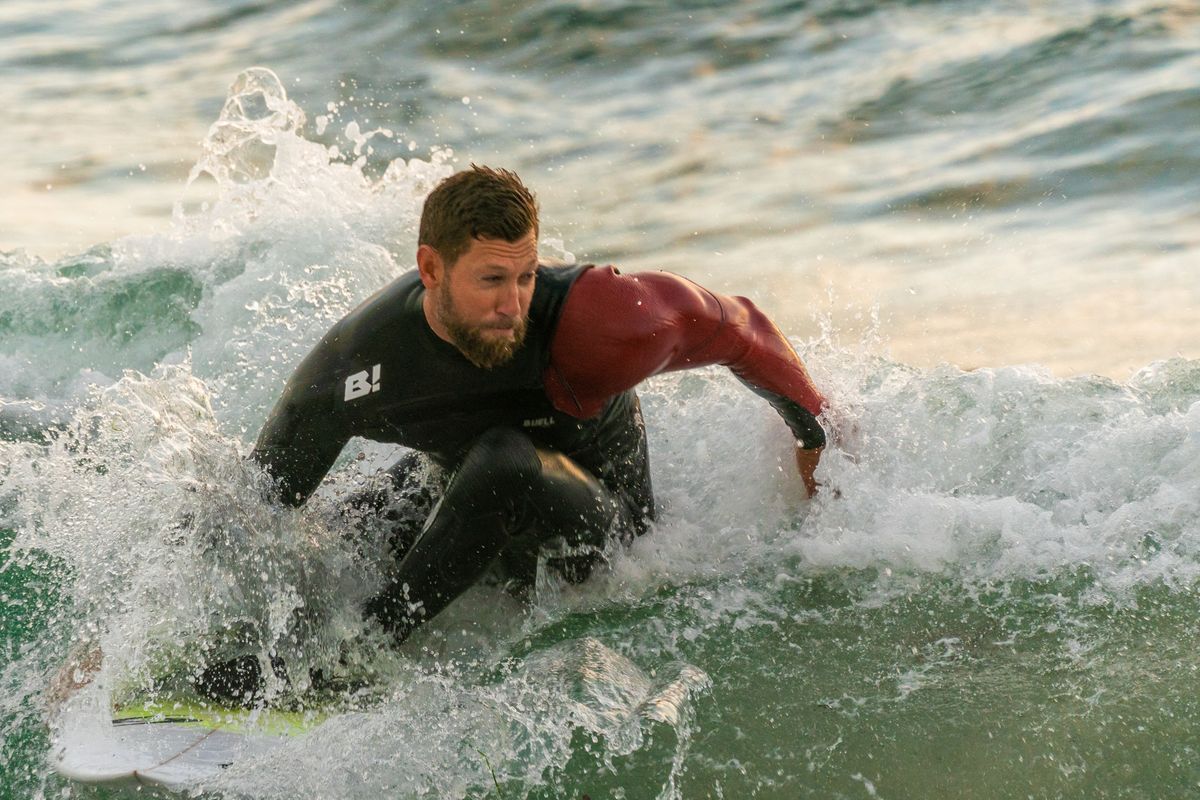
The ocean does not negotiate. It does not adjust its power to accommodate human capability or human courage. When a wave of thirty metres approaches the rocky headland at Nazaré in Portugal, it does so with the same absolute indifference to everything in its path that it has exercised for the entire geological history of the Atlantic. The surfer who chose to drop into it on a Tuesday morning in February did so in full knowledge of what the ocean is, and in full knowledge of the consequences of error, and paddled over the lip anyway.
Big wave surfing exists in a category of extreme sport that occasionally produces outcomes so extreme that they require the entire category to be reconsidered. The performance at Nazaré this February was such an outcome. The wave, subsequently measured by the World Surf League's standardised panel at 29.7 metres — accepted as a minimum and typically reported as thirty — exceeded by four metres the previous world record for the largest wave ever surfed. To communicate what four metres means in this context: four metres is approximately the height of a two-storey building. The previous record was itself an achievement that the surfing community had considered close to the limit of what was humanly survivable.
The conditions that produce a wave of this size at Nazaré are specific and understood. An underwater canyon of exceptional depth — the Nazaré Canyon, which runs for 170 kilometres offshore and reaches a depth of 5,000 metres — focuses and amplifies swell energy in a way that allows waves to grow to sizes that simply do not occur in other environments. When the North Atlantic produces the right combination of swell height, period, and wind direction, Nazaré becomes a place where the rules of the ocean are, briefly, different from everywhere else.
The surfer himself had spent fifteen years building toward a wave of this magnitude. His preparation regime is, by any measure, extraordinary. He trains in a pool twice weekly to improve breath-hold capacity, which now extends to six and a half minutes. He works with a psychologist on the specific challenge of managing fear in an environment where the stimuli for fear are entirely rational — the threat is real, the consequences of error are severe, and the body's instinctive responses are designed for self-preservation rather than the pursuit of large waves. He has survived three hold-downs — the term for the experience of being submerged by a wave and unable to surface — that his analysis team, reviewing the footage, have classified as potentially lethal.
The ride itself lasted approximately twenty-two seconds from the moment he dropped into the wave to the moment he pulled off its face. Twenty-two seconds during which he reached a speed of approximately 85 kilometres per hour, maintained contact with the wave's face through three significant buckles in the surface — distortions in the wave's shape that can throw a rider off trajectory with no warning — and pulled into a bottom turn at the base of the wave that placed him precisely in the channel where his safety team was waiting.
The safety team is part of what makes modern big wave surfing survivable in ways that it was not a generation ago. Jet ski rescue craft, inflatable impact vests that deploy automatically on submersion, communication equipment, and coordinated protocols for wave sets have professionalised the management of rescue in a sport where rescue was previously improvised and unpredictable. The surfer's safety team includes a former military diver and a specialist in ocean survival medicine, facts that communicate something about the level of hazard that the sport's practitioners consider normal.
The footage of the ride, released to a global audience within hours of the event, accumulated the kind of views that the internet reserves for moments that strike some fundamental chord. Comments sections across multiple platforms displayed a convergence of emotional responses — amazement, disbelief, respect, and a particular response that appeared repeatedly and that might best be described as the recognition of something that was not previously known to be possible. That recognition — the moment when human limits are publicly revised — is what sport, at its highest expression, most reliably produces. The ocean remains indifferent. The surfer has added his name to the list of people who chose to meet it anyway.
About Kai Nakamura
Kai Nakamura is a sports journalist covering Surfingand major international sporting events. Their work focuses on analysis, athlete performance, tournament coverage, and breaking sports news.