Competitive swimming is contested using four distinct strokes, each with its own technique, rules, and character. Whether you are watching an Olympic final or learning to swim yourself, understanding the four strokes, freestyle, backstroke, breaststroke, and butterfly, is the foundation for appreciating the sport.
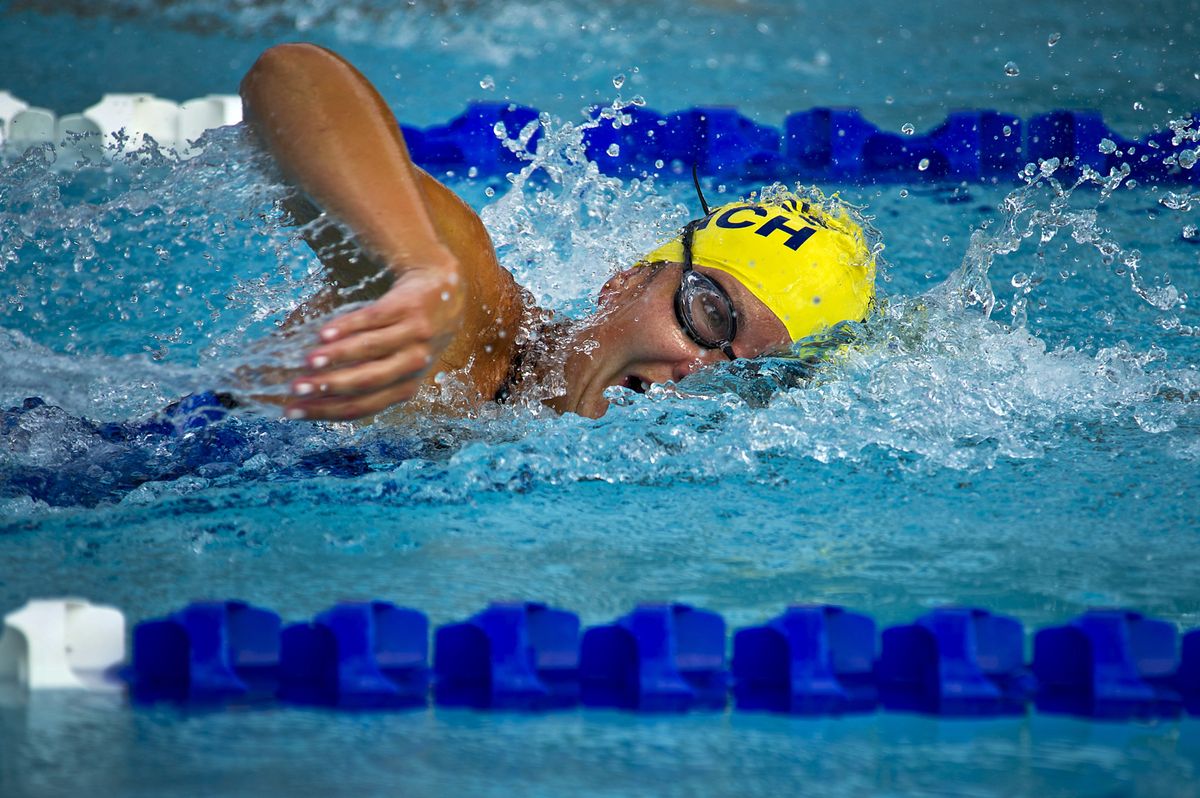
Freestyle is the fastest and most familiar stroke. In races, "freestyle" technically means the swimmer may use any style they wish, but in practice everyone swims the front crawl because it is the quickest. The swimmer lies face down, pulls alternately with each arm in a windmill motion, and kicks continuously with a flutter kick, turning the head to the side to breathe. Because it is the fastest stroke, freestyle features in many of the sport's marquee events across a range of distances, from short sprints to long-distance races.
Backstroke is essentially freestyle performed on the back. The swimmer lies face up and uses a similar alternating arm pull and flutter kick, but facing the sky. This makes breathing easy, since the face stays out of the water, but it introduces a unique challenge: swimmers cannot see where they are going and must judge the approaching wall using markers and backstroke flags strung across the pool. Backstroke is also the only stroke that starts in the water, with swimmers gripping the starting blocks and launching backward, rather than diving from above.
Breaststroke is the slowest of the four and the most technical. Swimmers face down and perform a symmetrical, frog-like movement: the arms sweep out and back together while the legs perform a "whip kick," snapping outward and together. The stroke has a distinctive glide phase, and strict rules govern the timing, requiring the arm pull and leg kick to be simultaneous and symmetrical. Because so much depends on precise technique and timing rather than raw power, breaststroke is often described as the hardest stroke to master.
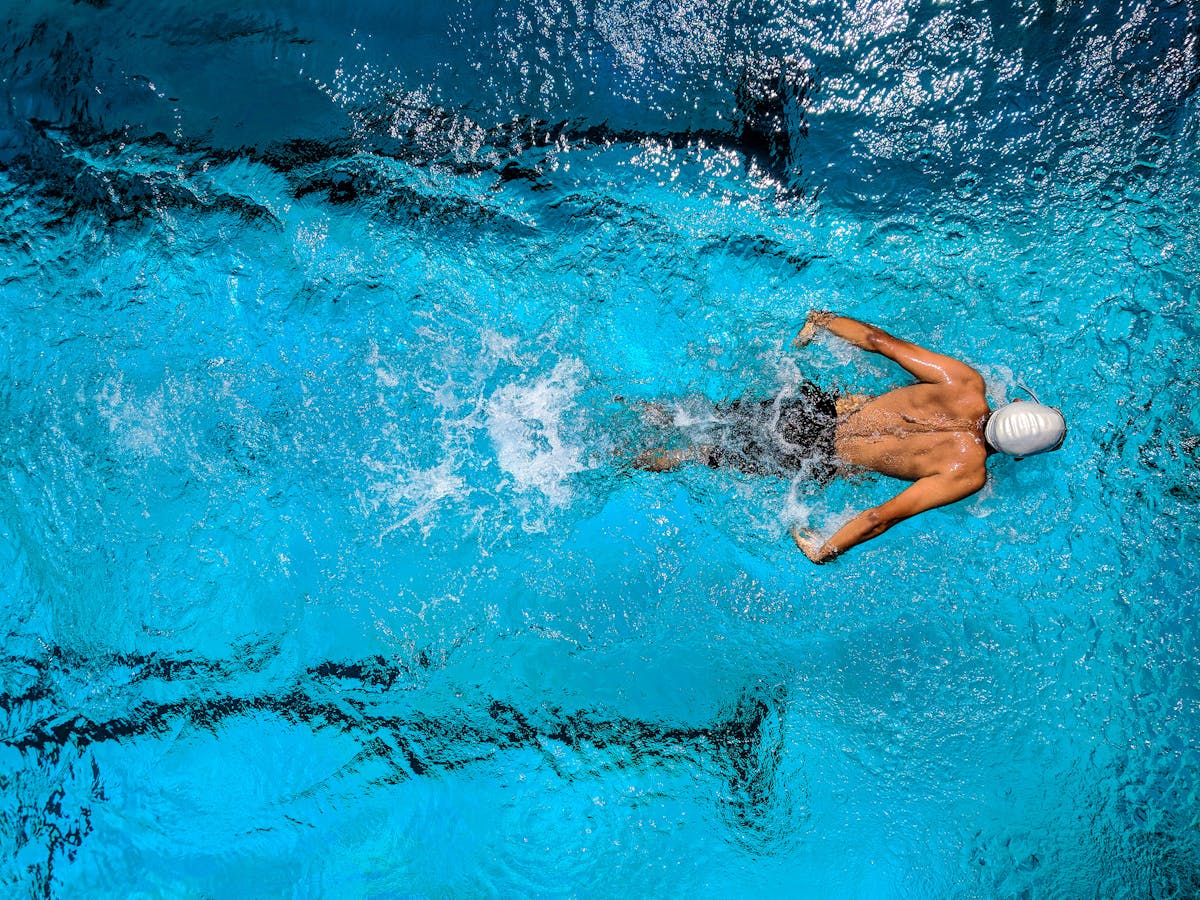
Butterfly is the most physically demanding stroke and one of the most spectacular to watch. Both arms move together in a powerful over-the-water recovery, while the legs perform a "dolphin kick," undulating together like a single fin. The whole body ripples in a wave-like motion, and the stroke demands enormous strength, rhythm, and coordination. When done well it looks graceful; done poorly it is exhausting and awkward, which is why butterfly is usually the last stroke swimmers learn.
Beyond the individual stroke races, two events combine all four. In the individual medley, a single swimmer performs all four strokes in a set order: butterfly, backstroke, breaststroke, and finally freestyle. This tests a swimmer's all-round ability and is a true examination of complete skill. In the medley relay, four different swimmers each swim one stroke, but in a slightly different order, backstroke, breaststroke, butterfly, then freestyle, because the backstroke leg starts in the water and therefore goes first.
Races are held over various distances, and swimmers must obey the specific rules of each stroke, including how they touch the wall and how they turn. Breaststroke and butterfly, for example, require a two-hand touch, while freestyle and backstroke allow a one-hand touch.
Once you can recognise the four strokes and understand their differences, competitive swimming becomes far richer to watch. You can appreciate the raw speed of freestyle, the hidden difficulty of breaststroke, the sheer power of butterfly, and the complete athleticism required to master all four in a medley.
About Claire Bennett
Claire Bennett is a sports journalist covering Swimmingand major international sporting events. Their work focuses on analysis, athlete performance, tournament coverage, and breaking sports news.